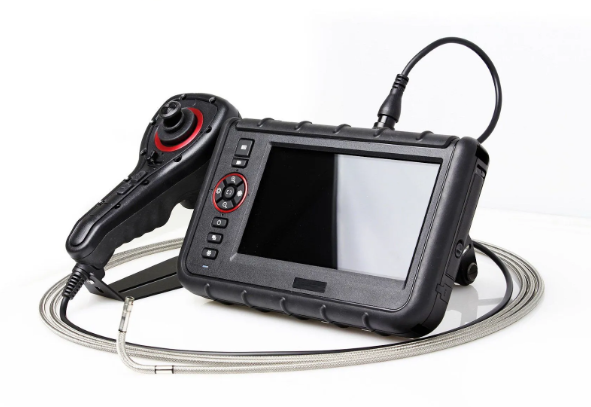
How Lighting Technology Impacts Inspection Accuracy
When people compare borescopes and videoscopes, they usually talk about resolution, probe diameter and articulation. All of that matters—but without the right lighting, even the best optics will give you misleading results. Harsh glare, deep shadows or muddy illumination can easily hide the very defects you’re trying to find.
In remote visual inspection (RVI), lighting isn’t a “nice extra”—it’s half the system. Modern borescopes and videoscopes use increasingly sophisticated light sources and control options to give inspectors the contrast, color and clarity they need to make confident calls on what they’re seeing.
The fundamentals of borescope lighting
Brightness: enough, but not too much
The first job of any lighting system is obvious: make dark spaces visible. But “more light” isn’t always better. Too much brightness can:
- Wash out fine detail
- Create glare hotspots on shiny surfaces
- Hide small cracks or pits in a blanket of reflected light
Too little light has the opposite problem—grainy images, low contrast and guesswork. Accurate inspection depends on being able to dial brightness up or down in small steps to match the material, distance and surface finish you’re looking at.
Color temperature and color rendering
Lighting color affects how materials and defects appear:
- Cooler light can emphasize sharp edges and surface texture.
- Warmer light can make some discoloration harder to judge.
Good borescope lighting aims for a neutral color balance and high color rendering so that heat tinting, staining, corrosion products and other subtle cues are visible and realistic.
Common lighting issues that hide defects
Glare and specular reflection
Highly polished or machined surfaces—like turbine blades or bearing races—behave almost like mirrors under strong light. If the lighting is too direct or intense, the image can be dominated by white glare patches that:
- Obscure crack tips and edges
- Make it hard to judge surface contour
- Force the inspector to move the probe constantly to find a usable angle
Adjustable brightness, diffused lighting and the ability to offset the view angle are all crucial tools for taming glare.
Deep shadows and uneven illumination
On the other side of the spectrum, poor lighting can create dark zones and harsh shadows in recesses, corners and behind features. That’s where defects love to hide. Uneven lighting may cause:
- Parts of the field of view to be consistently underexposed
- Inspectors to miss damage hiding just inside a shadow
- Misjudgement of depth or shape due to excessive contrast
Modern systems strive for more even light distribution, so technicians can see the full frame clearly instead of constantly fighting dark patches.
Modern lighting technologies that improve accuracy
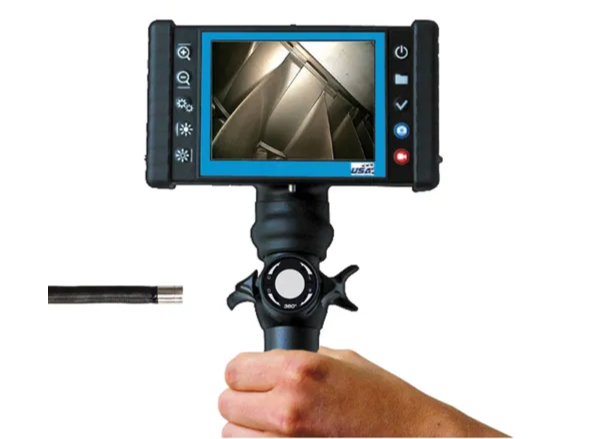
How USA Borescopes helps you get lighting right
High-intensity LEDs and smart control
Older borescopes relied on external light sources and fiber delivery. Today, high-intensity LEDs at or near the tip provide bright, efficient illumination in a compact package. The real gains come from:
- Finer brightness adjustment steps
- Preset or programmable lighting profiles
- Stable color output across the brightness range
That gives inspectors more control over how surfaces appear, especially when moving between different materials or stages in a single inspection.
Directional and diffused lighting options
Some advanced systems use clever lensing or diffuser designs to shape the light:
- Directional lighting highlights texture and edges
- Diffused lighting softens reflections and reduces glare
Being able to shift between a more focused or more diffused light pattern helps technicians adapt to different surfaces—polished blades versus rough castings, for example—without changing tools.
Matching lighting to industry and application
Different sectors put very different demands on lighting:
- Aviation: Highly reflective metals, tight spaces, critical crack detection.
- Power generation: Large, often sooty or dusty gas paths with mixed materials.
- Oil and gas: Dark, contaminated environments with corrosion and deposit build-up.
- Manufacturing: A mix of cast, machined and coated surfaces.
The lighting approach that works perfectly in one environment may be frustrating in another. That’s why it helps to work with a provider who understands how borescope lighting needs vary across the many industries and applications where RVI is used.
Operator technique: the human part of lighting accuracy
Lighting technology can only do so much on its own; the rest is technique. Inspectors can dramatically improve what they see by learning to:
Adjust brightness before moving the probe
Instead of immediately shifting position when a surface looks washed out or too dark, try changing brightness first. Often, a small reduction in intensity or a slight increase is all it takes to reveal hidden detail without losing your viewing angle.
Use angle and distance to your advantage
Moving the tip a few millimetres closer or further, or changing the angle slightly, can:
- Reduce glare from reflective surfaces
- Throw gentle, revealing shadows across fine cracks
- Bring small pits or porosity into sharper relief
Good inspectors constantly balance probe position, articulation and lighting to get the clearest possible picture of each feature.
Maintenance and calibration: keeping lighting performance consistent
Lighting systems age. LEDs dim slightly over time, and optical surfaces can pick up fine contamination. Left unchecked, this gradual change can:
- Reduce contrast and clarity
- Shift color balance enough to affect defect visibility
- Make today’s images look subtly different from reference shots
Regular cleaning, careful handling and periodic checks against known references help keep lighting performance consistent. When issues go beyond routine care—such as damaged windows, internal contamination or fading light output—professional evaluation and repair through specialist inspection equipment services can restore performance and extend the useful life of the system.
Choosing lighting that supports accurate, reliable inspections
When you specify a borescope or videoscope, it’s tempting to focus on resolution and articulation first, and treat lighting as an afterthought. In reality, lighting should be part of your core selection criteria:
- Does the system provide enough light for your deepest, darkest inspections?
- Can you finely control intensity to manage glare on bright metals?
- Does the color and uniformity help you distinguish subtle surface changes?
- Is the lighting robust and consistent enough for your workload and environment?
Getting the lighting right means inspectors spend less time fighting the image and more time doing what matters: finding and accurately characterising defects.
How USA Borescopes helps you get lighting right
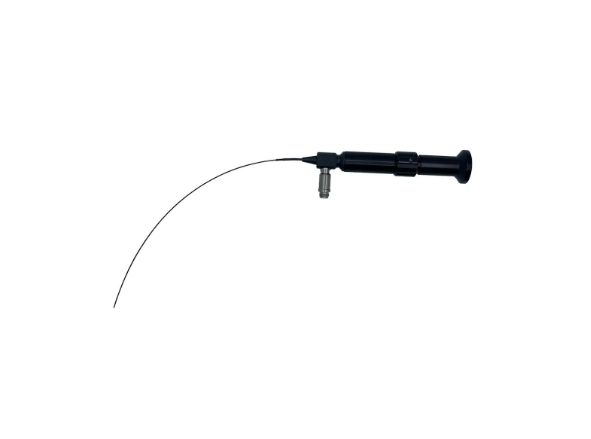
Inspection accuracy is never just about the camera; it’s about the entire visual chain—from the light leaving the tip to the decision recorded in your report. USA Borescopes focuses on remote visual inspection technology and understands how lighting, optics, articulation and operator technique work together in real-world inspections. Their experience across aviation, power generation, oil and gas and manufacturing is reflected in the way they design and recommend systems, as outlined on their About Us page.
If you’re frustrated by glare, dark corners or inconsistent images in your current inspections—or you’re planning to upgrade to more capable videoscopes—it’s worth reviewing whether your lighting setup is helping or holding you back. To discuss your inspection challenges and explore equipment options that deliver the clarity you need, contact USA Borescopes and speak with their specialists.
About the Author
This guest article was written by a technical content writer specializing in industrial inspection and maintenance tools. They work with equipment manufacturers, MROs and asset operators to turn hands-on field experience into clear, practical guidance that helps teams choose and use borescopes more effectively—particularly when lighting quality makes or breaks inspection accuracy.