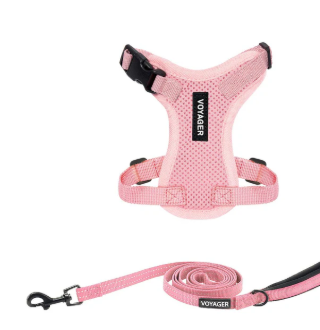
A Beginner’s Guide To Cat Halter And Leash For First-Time Walkers
Teaching a dog to walk politely on lead is less a test of strength than a quiet conversation conducted through leash, body language, and timing. Among the growing array of training aids, the no-pull harness has earned a place not because it forces submission, but because it quietly rewrites the rules of the game. Instead of punishing exuberance, it removes the payoff that pulling has always delivered. The result is a walk that feels safer, calmer, and more cooperative for both ends of the leash.
The Everyday Challenge of Leash Pulling
The moment the door opens, excitement spikes, the shoulders drop, and the forward surge begins. Each successful lunge toward a scent patch, a fluttering leaf, another dog confirms that pressure works. Classic collars may disrupt the movement but they do so by putting pressure on the frail arches of the neck, a methodology that may deafen the action but will not alter the motivation. A no-pull harness moves the discussion off-topic and onto physics: as the dog goes on, the chest ring pushes the body slightly out of course, depriving the pull of its momentum. Through mere cause and effect, the dog realizes that a loose leash is what keeps the journey going, a principle that also applies when acclimating pets to a cat halter and leash outdoors.
How the Harness Delivers Clear, Gentle Feedback
The design is intentionally understated. A strap across the chest and a ring just behind the front legs create a mild pivot when tension is applied. Because pressure is spread over sturdy muscle rather than the trachea, the handler can deliver guidance without risking pain or fear. The dog receives an immediate, consistent message: pulling delays progress, while a loose leash restores it. Over time, this feedback loop encourages the animal to check in, both physically and emotionally, with the person holding the other end.
Supporting Calm, Confident Learning
Within a structured training plan, the harness becomes a neutral teacher. It is the very moment the leash knots tighter, and then the handler can relax or turn and reassign or compliment a voluntary shortening. The lack of choking or jabbing maintains the low level of stress in the dog and does not impair the mental space where the cues like the one saying let’s go or with me can be processed. Dogs learn to associate their own decisions with the success of the walk since the result is so predictable. The harness by no means substitutes praise, treats or patience; instead, it merely signals the correct decision to be more clear and the incorrect decision less pleasing.
Proper Fit and Handling Make the Difference
Fit matters as much as philosophy. A harness that swings loosely or rubs under the armpits will distract or chafe, inviting the dog to fuss rather than focus. Adjustments should be checked before every outing: snug enough to stay in place when a single finger is slid beneath the strap, yet generous enough to permit a full stride and deep breath. Growing youngsters, seasonal coat changes, and weight shifts all warrant a fresh fitting. A calm handler who keeps the leash relaxed, avoiding sharp pops or constant tension, allows the equipment to speak for itself whether working with dogs or adapting techniques for a cat halter and leash.
An Ethical, Welfare-Friendly Choice
Ethically, the no-pull harness aligns with the modern view that effective training need not hurt. It offers control without intimidation, steering without scolding. Owners report not only easier walks but also a brighter, more confident demeanor in their dogs evidence that learning took place without lingering worry. Over weeks and months, many teams discover that the harness becomes less a restraint and more a habit, its presence alone enough to remind the dog of the agreed-upon pace. Some eventually transition to a simple collar or back-clip, returning to the front-clip only in tempting environments such as farmers’ markets or wildlife trails.
Conclusion
Behavior change is rarely instant, yet the harness shortens the arc. Each uneventful step reinforces the notion that staying connected to the handler is the fastest route to everything a walk promises: interesting smells, forward motion, and shared attention. With steady practice, the dog who once dragged his person down the sidewalk learns to keep the cat halter and leash in a gentle J-shape, eyes flicking upward for direction. The transformation feels less like victory than like partnership between two travelers settling into the same rhythm, guided by equipment that asked quietly and listened carefully all along.